
Breakthrough technologies shaping the future of modern science

Modern science is moving at a pace that feels impossible to track, with new discoveries reshaping how you understand health, energy, and the universe itself. From artificial intelligence to gene editing, innovation is no longer isolated in labs but connected across industries and disciplines. If you want to explore how science and creativity often intersect in unexpected ways, you can visit https://theartofthebar.com/ where innovation is also reflected through culture and modern thinking.
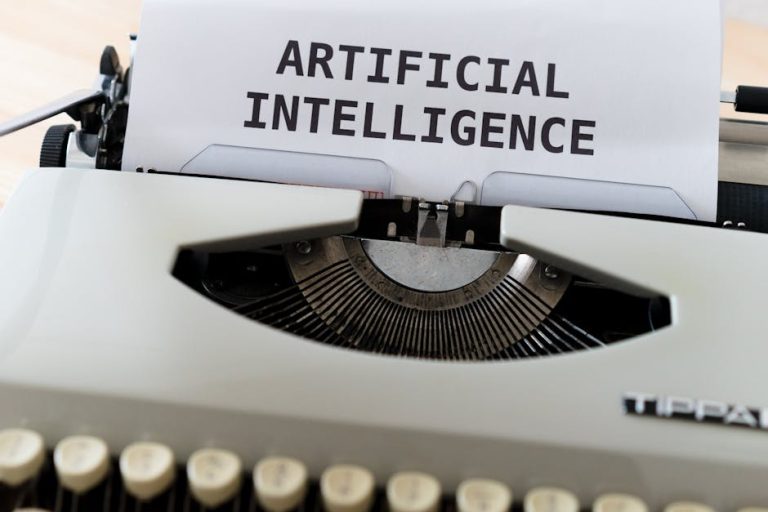
Artificial intelligence and data science transforming research
Artificial intelligence has moved from theory into daily scientific practice. Researchers now rely on machine learning to process massive datasets that would take humans years to analyze.
AI accelerates discovery across multiple fields. In medicine, algorithms can detect patterns in medical imaging faster than trained specialists. In physics, AI models simulate complex systems, helping scientists predict outcomes without running expensive experiments.
One of the most important contributions of AI is speed. Drug discovery, which once took over a decade, can now be shortened significantly through predictive modeling. Scientists feed molecular data into AI systems, which then identify potential compounds worth testing.
You can also see AI improving climate research. Models that once struggled to predict long term changes are now more accurate due to machine learning enhancements. This allows better preparation for extreme weather events.
Another key area is automation in laboratories. Robotic systems, guided by AI, perform repetitive experiments with high precision. This reduces human error and increases reproducibility, which is critical in scientific research.
Despite its advantages, AI also raises challenges. Data bias, ethical concerns, and transparency remain issues that scientists continue to address. Still, its role in modern science is only growing stronger.
Biotechnology and genetic engineering redefining life sciences
Biotechnology is reshaping how you think about life itself. With tools like CRISPR, scientists can edit genes with a level of precision that was once unimaginable.
Gene editing is already being used to treat genetic disorders. Diseases caused by single gene mutations can potentially be corrected at the DNA level. This approach shifts medicine from treatment to prevention.
In agriculture, biotechnology improves crop resilience. Scientists engineer plants that can withstand drought, pests, and changing climates. This is essential as global food demand continues to rise.
Another major breakthrough is synthetic biology. Researchers design organisms to perform specific functions, such as producing biofuels or breaking down environmental pollutants. This opens new possibilities for sustainable solutions.
Vaccines have also evolved rapidly due to biotechnology. The development of mRNA vaccines showed how quickly science can respond to global health crises. Instead of traditional methods, scientists now design vaccines using genetic instructions.
Personalized medicine is another result of these innovations. Treatments are tailored based on your genetic profile, increasing effectiveness and reducing side effects.
However, ethical questions remain central. Editing human genes raises concerns about long term consequences and access. Scientists and policymakers continue to debate how far these technologies should go.
Advanced materials and space exploration pushing boundaries
New materials are changing what is physically possible. Scientists are developing substances that are lighter, stronger, and more adaptable than anything used before.
Nanotechnology plays a major role here. By manipulating matter at the atomic level, researchers create materials with unique properties. These materials are used in electronics, medicine, and energy systems.
For example, graphene is one of the most promising materials discovered in recent decades. It is incredibly strong and conducts electricity efficiently. This could transform everything from batteries to flexible screens.
Energy innovation is also closely tied to material science. Advances in battery technology are making renewable energy more practical. Improved storage systems allow solar and wind power to be used more consistently.
At the same time, space exploration is entering a new era. Private companies and government agencies are working together to push beyond traditional limits.
Reusable rockets have reduced the cost of space travel. This allows more frequent missions and opens the door to commercial space activities.
Mars exploration is another focus. Scientists are studying the planet to understand whether life ever existed there. These missions also prepare for potential human exploration in the future.
Telescopes and satellites are becoming more advanced. They provide clearer images of distant galaxies and help scientists study cosmic events in real time.
The combination of advanced materials and space technology is expanding your understanding of the universe. It also leads to practical innovations that benefit life on Earth.
How interdisciplinary collaboration drives modern breakthroughs
One of the defining features of modern science is collaboration across fields. Breakthroughs rarely happen in isolation.
Physicists work with biologists. Engineers collaborate with medical researchers. Data scientists support nearly every discipline.
This cross disciplinary approach leads to faster and more creative solutions. For example, combining AI with biology accelerates drug discovery. Integrating material science with energy research improves sustainability.
Global collaboration also plays a key role. Scientists share data and findings across borders, making research more transparent and efficient.
Open access publishing and digital platforms allow you to access scientific knowledge more easily than ever before. This democratizes information and encourages innovation worldwide.
Education is evolving as well. Universities now emphasize interdisciplinary programs, preparing students to work across different fields.
This shift reflects a simple reality. Complex problems require diverse perspectives.
The real world impact of scientific innovation on everyday life
Scientific progress is not limited to laboratories. You experience its impact every day, often without noticing.
Healthcare has become more precise and accessible. Diagnostic tools are faster. Treatments are more effective. Telemedicine allows you to consult doctors remotely.
Technology has transformed communication. High speed internet, smartphones, and cloud computing connect people globally.
Transportation is also changing. Electric vehicles reduce emissions. Autonomous driving technology is being tested and refined.
Energy systems are becoming cleaner. Renewable sources are gaining ground, supported by better storage solutions.
Even food production is evolving. Biotechnology and data driven agriculture increase efficiency and sustainability.
These changes improve quality of life but also require adaptation. New technologies bring new challenges, from privacy concerns to job displacement.
Understanding these impacts helps you navigate a rapidly changing world.
Conclusion
Modern science is driven by a combination of technology, collaboration, and curiosity. Innovations in artificial intelligence, biotechnology, and advanced materials are not only expanding knowledge but also transforming everyday life. As these fields continue to evolve, they will shape the future in ways that are both exciting and unpredictable.
Related Reading
- Breakthrough science discoveries in early 2026 that are reshaping our world
- Economic Power Realignment: How Today’s Global Trends Are Shaping Tomorrow’s World
- Inside the New Wave of Artificial Intelligence: Key Innovations Shaping the Tech Landscape in 2026
About the Author